
The question behind the question.
"Which platform should my home run on?" is really three questions: who controls it day to day, what does it cost over ten years, and what happens when a company changes its mind about a product you built your house around?
We install all three of these platforms every month. Here's how we actually choose between them — and why the honest answer on premium projects is usually layers, not either/or.
Apple Home: the family-facing layer.
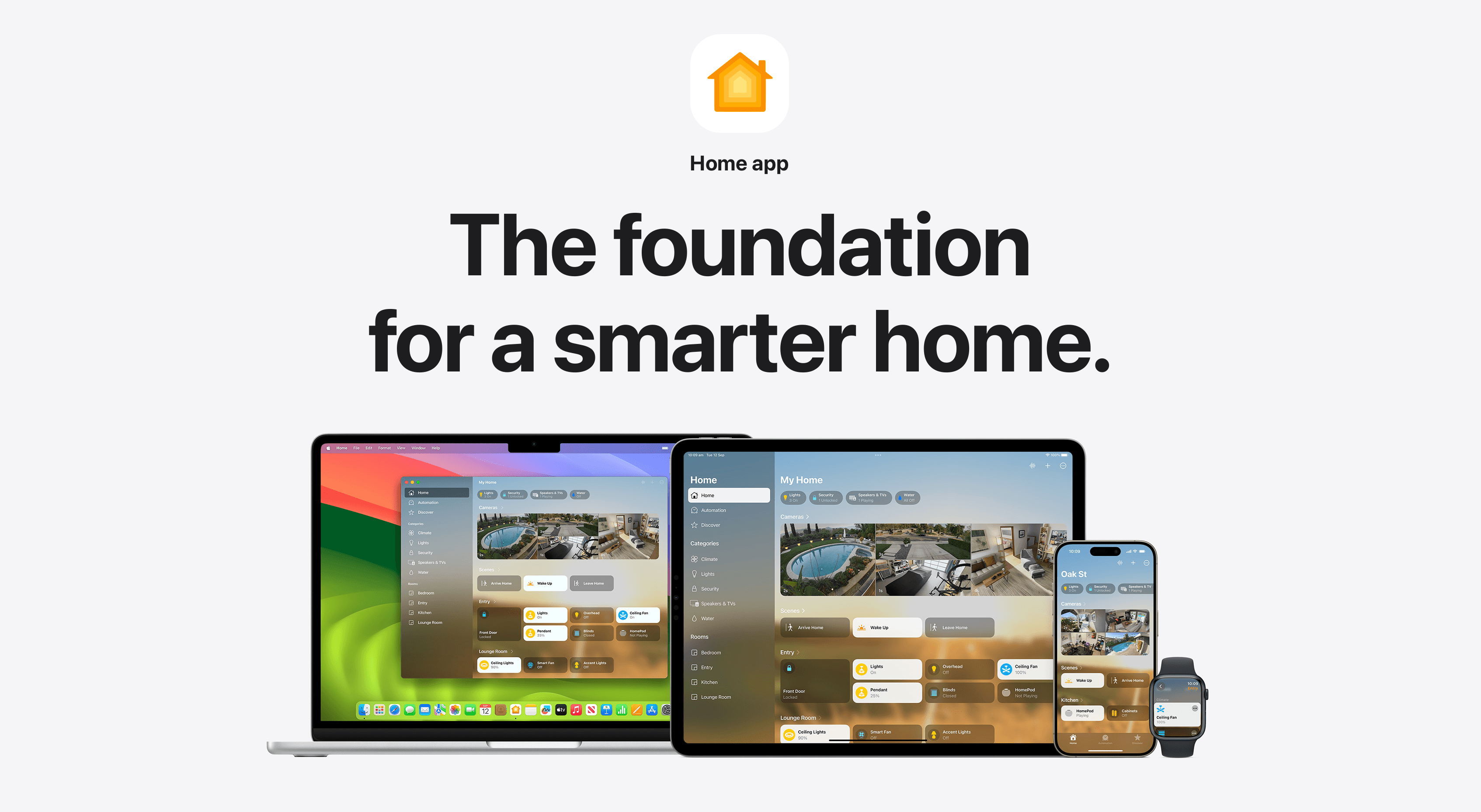
Apple Home is what we lead with, and we're one of the only Melbourne teams that does. The reasons are practical, not fashionable.
Everyone already knows how to use it. The interface is the phone the family already owns. No training, no laminated instruction sheet, no "don't touch that panel."
No subscriptions, no vendor account. Your home doesn't have a monthly fee or a login owned by an integrator. HomeKit Secure Video keeps camera clips inside your own iCloud, encrypted.
It's a control surface, not a nervous system. This is the part most people miss — and the reason the platform arguments are usually false choices. Apple Home is brilliant at being the face of the house. It is not the wiring underneath it.
Where it's not right: households deep in Android, and projects that need conditional logic beyond what Apple exposes. Both are real, both are fine — that's what the other layers are for.
KNX: the backbone that outlives everything.
KNX isn't an app — it's a wired, decentralised standard that's been running buildings for over thirty years, made by hundreds of manufacturers. Every switch, dimmer and relay is its own intelligent device on a bus. There is no central brain to fail, and no company whose commercial decisions can strand your walls.
Why we spec it under premium homes: the keypads the architects want — Basalte, Ekinex, Lithoss — are KNX-native. DALI lighting hangs off it cleanly. And in thirty years, when every app in this article has been redesigned four times, the bus in the wall will still switch the lights.
The honest costs: KNX hardware and programming cost more up front, and changes need a programmer, not a settings menu. It's infrastructure — you pay infrastructure prices and get infrastructure lifespan.
Control4: the established dedicated system.
Control4 is a mature, dealer-installed platform — twenty years in market, strong AV control, wall keypads and touchscreens the family can drive, one app over the lot. We install it and it works.
The trade-offs we make sure clients understand: it's a dealer ecosystem (changes go through an integrator), it carries an annual software subscription, and the deeper you build into it, the more the house speaks only Control4. For clients upgrading an existing Control4 home, staying is often the right call. For a new build starting from zero, we reach for it when the brief is AV-heavy and the client specifically wants the dedicated-remote, dedicated-panel experience.
How the layers stack on a real project.
On most of our premium builds, the answer looks like this: KNX as the wired backbone — relays, dimmers, DALI, the keypads on the wall. Apple Home as the family-facing surface — the app, the voice control, the automations the household actually touches. And where the project needs it, a dedicated layer for AV — Control4 or similar — driving the cinema and multiroom without dragging the whole house into one vendor.
That stack means no subscription holds your lights hostage, no single company's roadmap owns your walls, and the family controls the house from the phone in their pocket. It's also why the "versus" framing eventually dissolves: these aren't three answers to the same question. They're answers to three different questions.
The ten-second version.
- Apple household, wants simplicity, values privacy: Apple Home on top, wired properly underneath.
- Building premium, thinking in decades, architect has keypad opinions: KNX backbone, Apple Home face.
- AV-heavy brief, wants the dedicated-system experience, or extending an existing system: Control4 has earned its place.
Deciding for your own build? Send us the plans — we'll tell you which stack fits, and we'll tell you if the cheapest answer is the right one. It sometimes is.
Tags